More flowers, good pathways and good hardscapes: the ‘In Between Elements’ that make a big difference
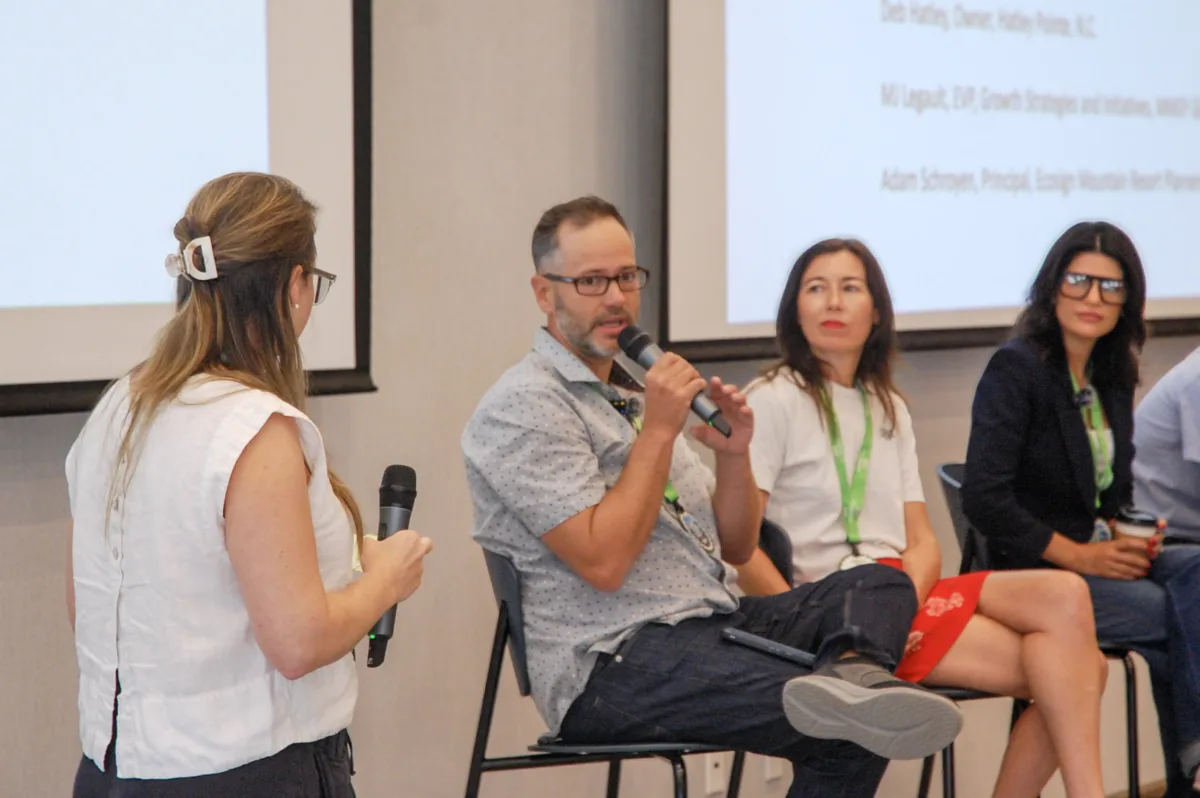
While new attractions often get the spotlight, some of the most impactful investments in a mountain resort's summer experience are the ones guests barely notice. The spaces between activities, how guests move through a resort, where they gather, and how they experience the landscape, can have an outsized influence on the overall guest experience, making thoughtful planning more important than ever. At the 2026 SAM Summer Ops Camp, Ecosign Principal and Managing Partner, Adam Schroyen, joined industry leaders for the "Summer Playbook" panel to discuss how resorts can strategically develop summer experiences that align with their identity, infrastructure, and long-term goals. Fellow panelists included Ryan Fiechtner (Director, Mountain Experience, Blue Mountain, Ontario), Deb Hatley (Owner, Hatley Point, North Carolina), and MJ Legault (EVP, Growth Strategies and Initiatives, MMGY Origin).
Drawing on Ecosign's extensive experience in mountain resort planning, Adam highlighted the differences between adapting an existing ski resort for summer use and planning a four-season destination from the ground up. While existing resorts can leverage their established infrastructure and brand, he noted that "the summer is going to be a different animal." Rather than viewing summer as a completely separate operation, however, Adam emphasized that valuable insights can be gained from a resort's existing winter identity, guest experience, and operational framework.
A key theme throughout the discussion was the importance of understanding a site's unique assets and constraints. Successful summer development begins with a thorough evaluation of circulation patterns, developable land, natural features, and existing facilities. As Adam explained, "the real master planning piece is to understand what the assets are, what the constraints are... understanding the circulation paths [and] how people move through the site is really critical." This foundation helps identify opportunities to improve the guest experience through both major investments and smaller, high-impact enhancements.
The conversation also touched on how a resort's infrastructure can influence summer opportunities. Adam noted that when planning new lift systems, summer uses can and should be considered alongside winter requirements. "Lift infrastructure, for instance, we can adjust where the lifts go so they reach a good lookout or a really special part of the mountain in the summer as well as accessing all the ski terrain in the winter." He also pointed to examples where resorts have selected gondolas over chairlifts because they better accommodate pedestrian traffic and open the door to additional summer business opportunities.
When deciding which attractions are the right fit for a destination, Adam stressed that successful planning goes well beyond selecting the latest trend. One of the most important questions operators can ask is: "Does the activity fit with the brand in the master planning stage?" Factors such as visitor demographics, site circulation, operating capacity, seasonality, and financial feasibility all play an important role in determining the right mix of experiences.
Importantly, the panel challenged the idea that every summer investment must generate direct revenue. As moderator Katie Brinton observed, "the equation for ROI can shift depending on what type of gap you're trying to fill." Adam echoed this sentiment, explaining that some of the most valuable improvements are often the simplest. "It's all that time between the activities; the rest stops and downtime during that whole four to six hour day. As long as those parts of the experience are as best as you can make them, you're most of the way there."
Those "in between elements" became one of the panel's most memorable themes. Thoughtful landscaping, intuitive circulation, comfortable gathering spaces, and attention to detail can have an outsized impact on the guest experience. Or, in Adam's words: "Soft landscaping, good pathways, good hardscape."
As mountain resorts continue to diversify beyond winter, the conversation reinforced a principle that has long guided Ecosign's work: successful four-season destinations are built around a deep understanding of place, people, and purpose. By aligning development decisions with a resort's unique assets, brand, and long-term vision, operators can create summer experiences that strengthen both guest satisfaction and business resilience.