Hotell, butikkar og fleire løyper - slik kan det bli sjåande ut i fjellet
The following is an English translation of the original article from Hallingdølen, Published: March 2, 2026 at 21:20
Hotel, shops and more trails – this is what the mountain area may look like
On Tuesday, politicians will be presented with planning sketches for Nesfjellet that are truly impressive.
Image caption:
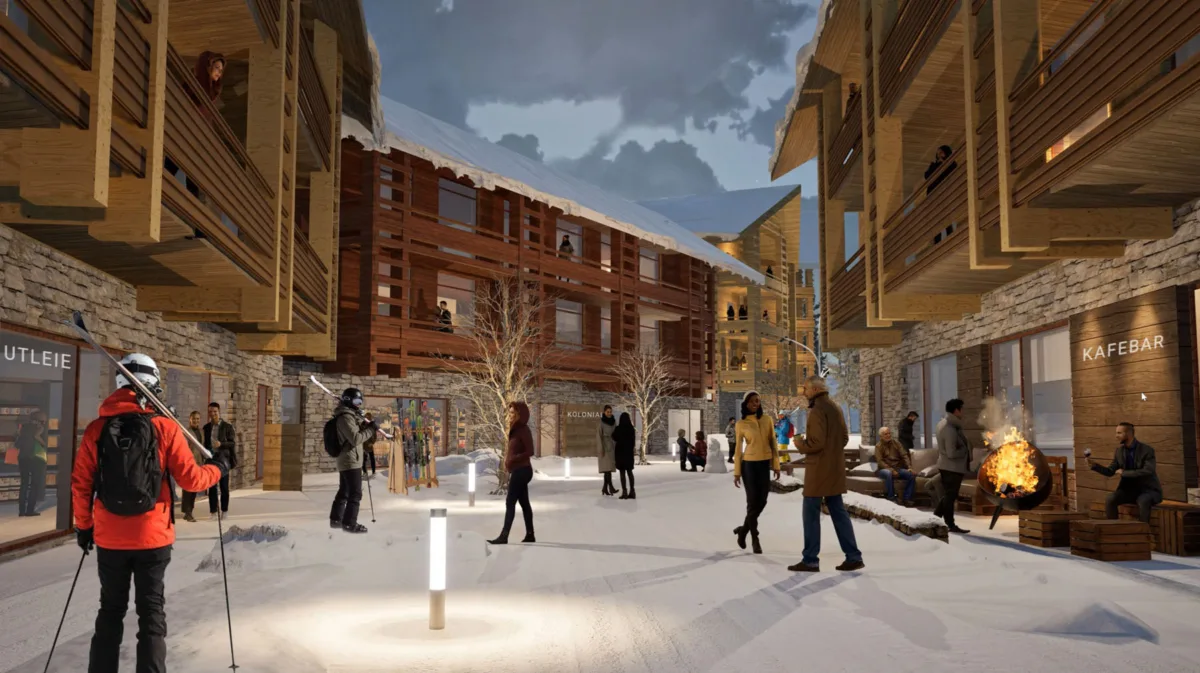
2026: Ecosign envisions that the streetscape may look like this in a future Nesfjellet Village.
Illustration: Ecosign / Baus Arkitektur AS
Olav Johannes Bøthun
Updated: March 2, 2026 at 21:20
Thirty‑five years ago, there was a single ski lift and a few cabins at Natten. Today, Nesfjellet is a destination to be reckoned with. In another 35 years, the area could be a place everyone is talking about.
“Everything” included
During Tuesday’s meeting of the main committee for development, politicians will be presented with two different future development packages from the landowners. One proposal comes from Olav Erik Tandberg and Siri Tandberg and their company. The other comes from Nesfjellet Project Development, represented by Berhard Tandberg and Jørgen Haraldseth.
Both proposals are highly detailed. The politicians originally requested that the two groups agree on a joint master plan. That did not happen, but both plans include hotels, shops, other lodging, and trail network distribution.
Image caption:
St. Andrews House
1997: Residents of Hemsedal visited Whistler to see how Ecosign had developed ski resorts in Canada.
Photo: Olav Johannes Bøthun
Hemsedal-inspired
Nesfjellet Project Development has used the same consultants who 30 years ago outlined the future for Hemsedal Ski Resort—the Canadian company Ecosign. The Canadian influence is easy to recognize for anyone who has visited well‑known destinations “over there” such as Whistler and Sun Peaks.
Image caption:
1985: Nothing to laugh about? Planning drawings for Nesbyen Alpine Center from 1985. It was intended to become one of the leading resorts in Northern Europe. The price tag was 130 million NOK, including a gondola from the town center.
Illustration: DBC Arkitekter / Hallingdølen
Future vision
2026: This sketch shows what the tourism infrastructure at Nesfjellet could look like, with a downhill route to Rukkedalen and a gondola from Nesflata.
Illustration: Baus Arkitekt
The gondola from Nesflata is of course included, but it is only a small part of the plan. There will be hotel buildings, apartment buildings, shops, and outdoor plazas. The development will require far more people than today—both guests and employees—to fill the area.
Image caption:
1993: Photo of Nesbyen Alpine Center on November 28, 1993. The middle of the three slopes was the newly opened Rodegard run.
Photo: Audun Aasheim
Only the beginning
But during Tuesday’s meeting, the politicians will not in any way be making decisions about the future of the mountain area. The list of considerations is long before any plan can be approved. The overarching goals must be defined. The municipality must decide on development of warm beds (commercial lodging) and cold beds (private cabins). Where should construction happen? Where should it not happen? Where should the trails run? Where should the lifts go? Where should the roads go?
“The municipal sub‑plan is fully underway. We are now preparing to filter the input according to the adopted planning program,”
writes municipal director Jeanette Kaspersen in her assessment.